About Our Finishes

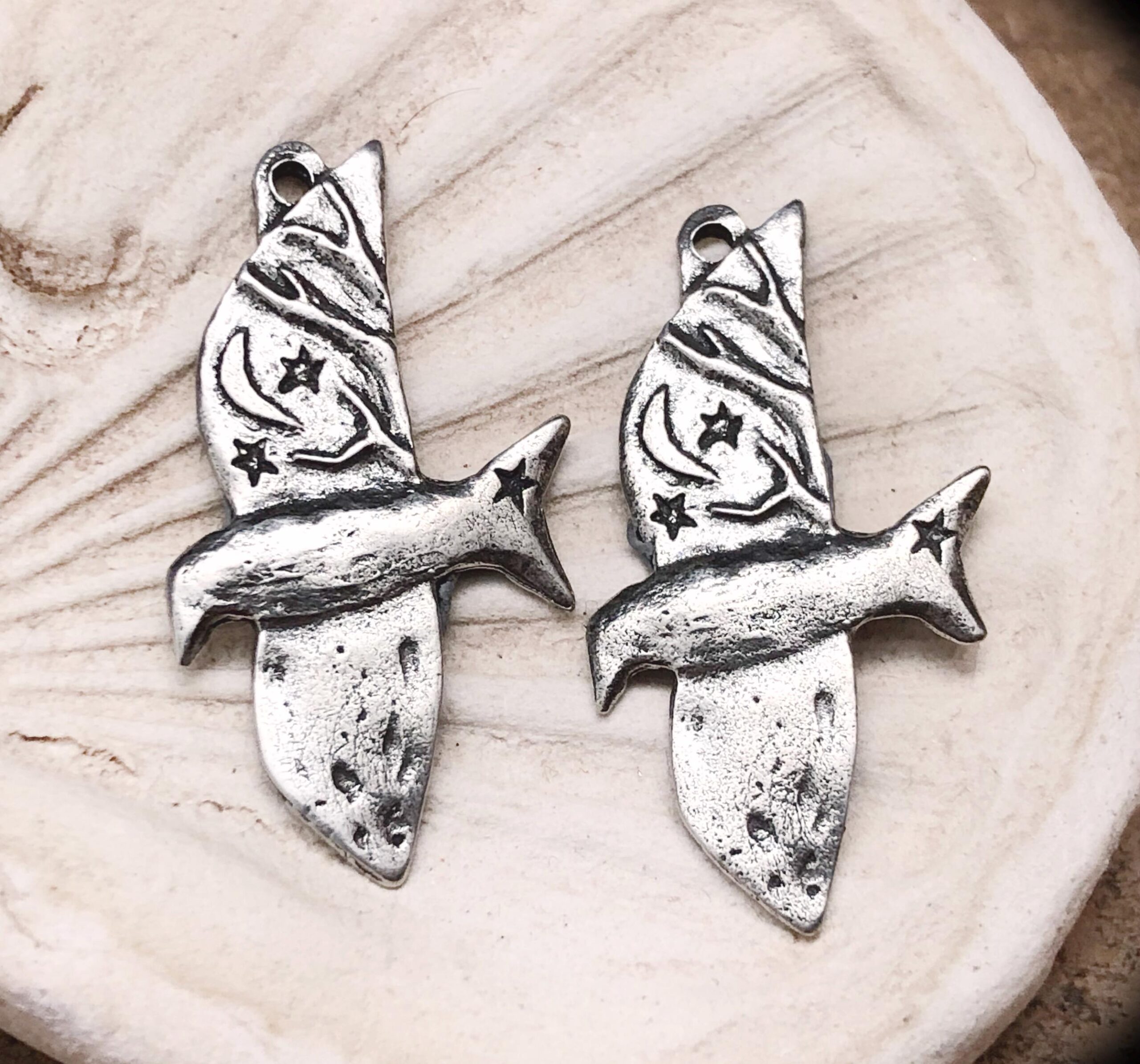
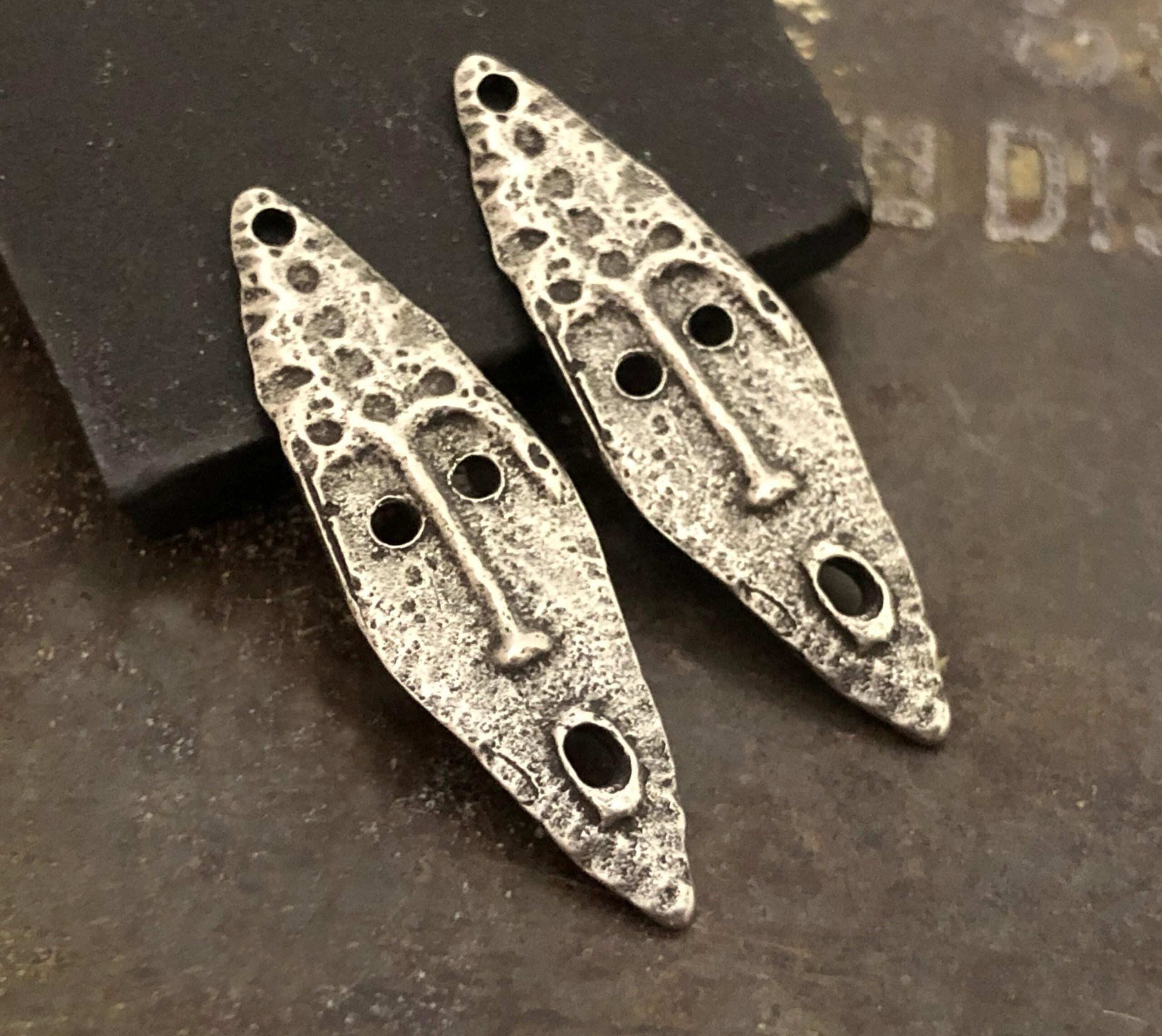

Our two finishes:
Aged (shown above in the 2 photos on the right):
antiqued with a semi-matte quality; also has a bit of gleam which highlights the design
Polished (shown in the 2 photos on the left): classic, clean look and quite shiny
A Note on Our Finish: Please expect slight variances in the shade of the Aged Finish from batch to batch, although the photos are a close representation. What this means for you is, if you purchased charms from us more than once, certain of your charms may have a slightly lighter or darker shade from your previous order. Or within one order, you may have charm designs that were finished at different times, so one pair may be lighter or darker from the other. But, each piece within one pair will always match in shade.
We developed our Aged Finish through years of experimentation and many iterations of it along the way to get it as consistent as we could. Our finishes are done in small batches using a low-tech, and traditional tumbling method. As much as we’d love to have every batch look the same as the last, it’s impossible, and we’ve come to look at it as the intrinsic nature and beauty of the handmade process. Our Polished Finish, however, is quite straightforward and is the more consistent finish.
